67 results found with an empty search
- BTS just dropped 2.0 and the chaos is real
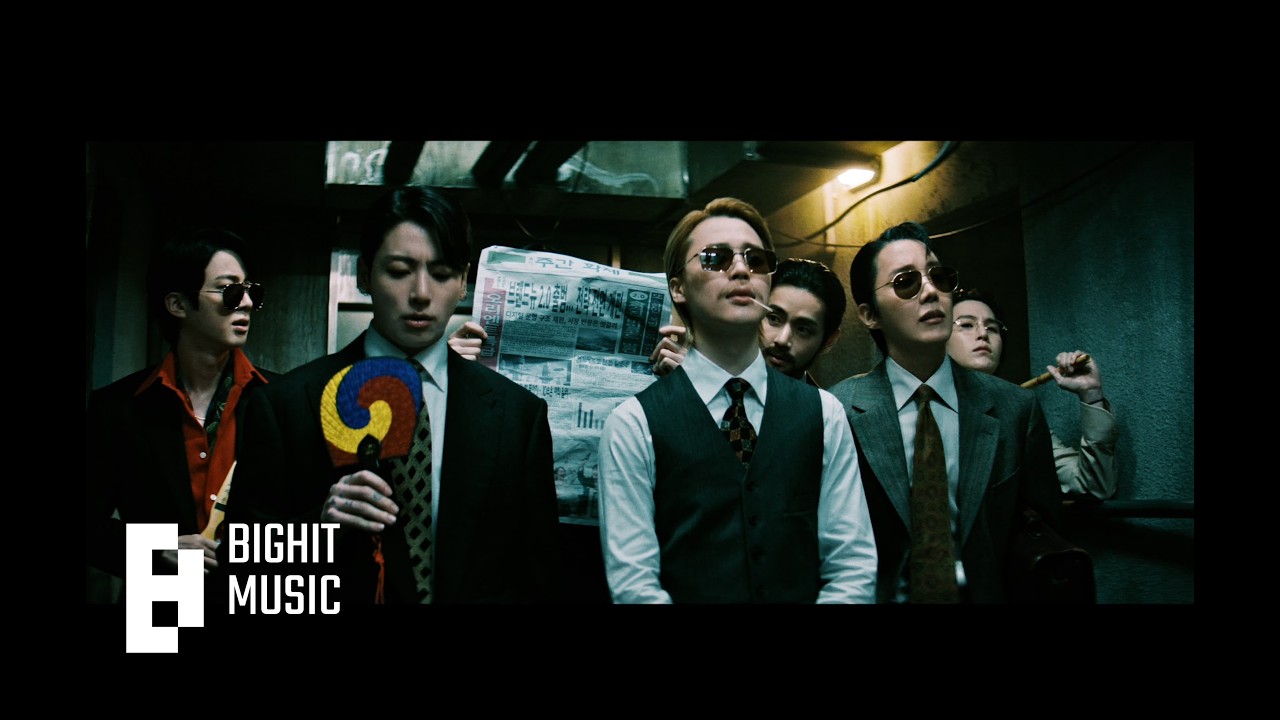
Just when we thought we had a handle on the Arirang era, BTS decided to remind us exactly why the throne belongs to them. 2.0 , the second official music video from their latest album just dropped, and it’s a high-octane fever dream that proves Bangtan’s swag isn’t just fire—it’s an entire wildfire. After a season of soulful introspection with Swim , the chaotic Bangtan we know and love has returned with a vengeance, blending cinematic grit with the kind of playful irreverence only they can pull off. The visual landscape of “2.0” is no accident; it’s the work of director Lee Hangyeol, a name that’s becoming synonymous with the group’s most iconic modern aesthetics. Having helmed V’s Winter Ahead and several high-profile commercials, Lee brings a polished, moody edge to the screen. Long-time ARMYs might also recognize his touch from 2020, where he served as the cinematographer for Stay Gold . In “2.0,” he trades that golden glow for something much darker and more daring, leaning heavily into neo-noir influences that have the fandom buzzing. Mafia Swag and “Oldboy” Energy The rumors are true: the MV is dripping with references to the cult classic Korean film Oldboy, draped in a “mafia-chic” aesthetic that feels both dangerous and incredibly expensive. We see the septet in sharp, intimidating suits, exuding a “thug” energy that feels like a natural evolution of their Ma City and Mic Drop eras. But in true BTS fashion, the tension is broken by their signature brand of chaos. Seeing Taehyung rocking a rugged beard and Jimin with a mustache was the jumpstart our timelines didn’t know they needed, while j-hope’s lethal slick-back, Yoongi’s laid-back professor look, Jin in red and shades, Jungkook’s babyface, and Namjoon’s bowl cut reminded us that they can make literally any look iconic. Came back to reclaim what belongs to them If there’s one scene that has the entire internet gagged, it’s the frantic elevator sequence. Watching the members scramble to change clothes in a confined, moving space is a hilarious nod to their real-life backstage energy, serving as a reminder that behind the global superstars are seven guys who still know how to have a laugh. Yet, don’t let the humor fool you—the choreography remains razor-sharp. As they execute power moves with effortless precision, the lyrics deliver a spicy reality check to anyone eyeing their spot. Lines like “Had your little fun, fella?” and “Came back for what’s mine, we don’t stop…” aren’t just lyrics; they’re a declaration of legendary status. It’s a subtle but firm mic drop to the industry, proving that while others might try to follow the blueprint, there is only one BTS. As of writing, the music video has already skyrocketed to 2.4 million views, proving that the world was more than ready for this comeback. The kings aren’t just back; they’re delivering a masterclass in longevity, forcing the industry to recognize that as long as BTS is in the room, the fire they started isn’t just burning—it’s blinding.
- Weathering with Diskarte? A Shinkai-style look at Pinoy resilience
Sa Pilipinas, ang pagbangon ay hindi lang basta "recovery"—ito ay isang lifestyle. While the world looks at disaster resilience through academic papers and urban planning, Filipinos have been doing it for decades with a mix of diskarte , prayers, and a healthy dose of "bahala na." Comparing our journey to Makoto Shinkai’s "Disaster Trilogy" ( Your Name , Weathering with You , and Suzume ), it’s clear that whether it’s a falling comet or a falling economy due to corruption, the Pinoy spirit remains "unbothered" (kahit pagod na). Here's a look at Filipino resiliency through the lens of Makoto Shinkai: 1. ‘Your Name’ and Rural Resilience: Fueled by Bayanihan In Your Name , a comet wipes out a rural town, but the connection between people saves them. Sa Pilipinas, our rural areas are the "Itomori" of the world. Isolated, often neglected by the national budget (hello, internal colonialism!), but fueled by Bayanihan . When a typhoon hits a province, the government might be slow to arrive (na-traffic yata ang budget?), but the neighbors are already out there with ropes and bangka . Like Mitsuha, the Filipino youth in provinces often dream of the "Tokyo" life (Manila or abroad), but when disaster strikes, the roots of the community are what hold the ground. We don't need a body-swapping comet to tell us that our survival depends on the person next to us. 2. ‘Weathering with You’ and Urban Diskarte Tokyo in Weathering with You is perpetually raining—a scene every Manileño knows by heart (looking at you, España and Taft). Shinkai’s film shows a world where people just... adapt. They buy umbrellas, they move on, and eventually, they accept the "new normal" of a sunken city. In the Philippines, urban resilience is seeing a Manileño wading through chest-deep, chocolate-colored floodwater while holding a plastic bag of pandesal over his head, smiling at a news camera. It’s "Weathering with You" but with more grit and less angst. While corruption might drain the funds meant for better drainage systems, the Pinoy "diskarte" fills the gap. We build makeshift rafts out of refrigerators and continue business as usual. We don’t complain to the heavens for the rain; we just figure out how to commute through it. 3. ‘Suzume’ and the Doors of Corruption Suzume is about closing doors to prevent "the worm" from causing earthquakes. In the Philippine context, the "worm" is often the systemic corruption that weakens our infrastructure. Every time a bridge collapses or a "reblocked" road cracks after two weeks, a door was left open somewhere by someone in office. But like Suzume, the Filipino people have become the "Closers." We have developed an emotional resilience that allows us to face these "earthquakes" of governance without losing our minds. We work through the disaster, we fix the "doors" ourselves through community pantries and volunteerism, and we keep moving. The "No-Complain" Policy: Resilience or Stoicism? The article highlights how Shinkai’s films shift from a "tech-fix" (technocentric) view to a more "holistic/emotional" resilience. This is where Filipinos excel. Our resilience isn't found in high-tech sea walls or earthquake-proof skyscrapers (though those would be nice if the funds actually went there). Our resilience is Cultural. The Humor: We make memes about our tragedies. The Faith: "Nasa Diyos ang awa, nasa tao ang gawa." The Silence: We often work through disasters without complaining, not because we are submissive, but because we are survivors. We know that waiting for a "hero" might take too long, so we become our own. The Verdict The Philippines is a living Makoto Shinkai movie—beautiful landscapes, constant threat of natural disasters, and a deep, unspoken connection between its people. But unlike Shinkai’s protagonists who often look at the sky in longing, Filipinos look at the sky, check the PAGASA update, and start moving the furniture to the second floor. Resiliency isn't just surviving the storm; it’s knowing how to dance (or swim) in it while waiting for the next "door" to close. Kaya natin ‘to. Tuloy ang ikot ng mundo.
- BTS showcases growth and artistry on ‘Arirang’ after hiatus
BTS Arirang shoot (Source: BTS Weverse) No comeback has sounded better. It’s been over a week since the greatest comeback of all time: BTS returning after an almost four‑year forced hiatus. Fresh off their discharge from mandatory military service, RM, Jin, SUGA, j-hope, Jimin, V, and Jung Kook immediately dove into crafting what we now know as “Arirang,” their most ambitious album to date. To no one’s surprise, BTS once again delivers their best and somehow does even better, pushing the limits of their clever lyricism, musical creativity, and vocal technique while remaining rooted in who they are, where they come from, and what they’ve lived. The result is a sonically coherent 14-track undertaking that fuses rap, hip‑hop, trap, pop, EDM, rock, traditional Korean music, R&B, country, and more into a sound unmistakably theirs. On Arirang, the rappers sing and the vocalists rap, blurring lines and showcasing the best of both their Korean and Western influences. It’s a fresh, masterful demonstration of each member’s vocal technique, their familiar voices placed in striking new contexts. The album serves as an homage to their roots, a love letter to fans, and a recognition of their achievements all at once. They’re unafraid to be mature, unafraid to be sexy, unafraid to drop expletives — apt choices for seasoned artists with over a decade of success behind them. All seven members appear on all 14 tracks — a deliberate decision, given that previous albums have included solos or subunit songs. They’ve acknowledged how challenging it is to feature all seven members seamlessly (and to have done so for 13 years!), yet they continue doing what they do best: meshing their contrasting colors into tracks that elevate each individual voice. For this project heralding their Chapter 2, BTS enlists a mix of in‑house and external collaborators from around the globe, from longtime BTS producers Pdogg and GHSTLOOP to international names including Diplo, Ryan Tedder, and Mike WiLL Made-It. In earlier interviews, the group said they lived together dorm‑style in the US, creating the album in a songwriting‑camp environment with the other producers. They’ve also said this is the most BTS‑like album they’ve ever made, and it couldn’t be any truer. They’ve even warned listeners that the songs are so good their favorites will keep changing, which we can confirm is absolutely the case. Track by track BTS Arirang album cover (Source: ibighit.com) “Body to Body” opens the album as an intense, beat‑forward dance track rooted in rap and hip‑hop, an introduction to the essence of BTS: artists who honor their origins while evolving across genres. The Arirang sample is outstanding work, and yes, we’re still hoping for a choreography that hits just as hard. “Hooligan” is a fun rap‑ and vocal‑heavy song packed with clever lyrics that will stick with ARMY — and anyone else — for ages. The “hahahahahahahahaha” part sounds playful but is deceptively challenging to sing along to. “Aliens” is a heavy‑hitting (and at times, diss ) track showcasing striking vocal choices, especially from Jung Kook and Jimin. With mentions of Korean independence leader Kim Gu, specific Korean traits, and the “hut dool” chants toward the end, it feels like a modern, electrified take on a traditional sound. “FYA” is inspired during the songwriting camp by producers constantly saying “that’s fire.” The track surely lives up to its name: coming in hot, hard, and begging for a fire choreography. “2.0,” about BTS’s second chapter, is a track dominated by a strong hook and choreography that will surely be unfollowable by roughly 90% of the world’s population. “No. 29” is a recording of the gong sound and the over 1-minute reverberation (yes) coming from the Sacred Bell of Great King Seongdeok or the Emille Bell, Korea’s 29th national treasure. To us, it evokes the image of a ship signaling its arrival — fitting for the album’s theme. It also acts as an interstitial, setting the tone for the album’s mellower second half. “Swim,” the lead single, is laidback yet impressive, weaving together an intriguing mix of genres while spotlighting the members’ strengths. The track feels like sailing on waters, both peaceful and chaotic at times but the waves offer a calming reassurance. “Merry Go Round” is perhaps the album’s most melancholic track. Despite its carousel‑bright title, the mood is heavy and introspective, with the members exploring striking vocal techniques. A masterpiece. “Normal” showcases BTS’s power — and use of expletives (!) — as they get unapologetic about what normal means for them. “Like Animals” is trippy, moody, and heavy, its rock‑laced guitars underscoring a performance that mesmerizes with the members’ exquisite vocals. “they don’t know ’bout us” opens with what sounds like a 1930s music sample (though we can’t be too sure). It quickly pulls listeners in with heavy, sick beats, while Jimin surprises with his rich lower‑register. “One More Night” is a breath of fresh air after several heavy tracks. RM stuns with his ethereal vocals, reminiscent of his solo song “Hectic.” With its EDM pulse, it feels like a perfect driving song: Gen Z- and radio‑friendly, right at home in a bar setting. “Please” is another excellent driving track featuring a seamless blend of Korean and English with easy melodies and R&B. To our ears there are hints of “SDL” by Agust D (Suga), showing how their solo experiences inform the group’s sound. “Into the Sun” experiments with autotune and harmonies while still spotlighting each member’s strengths. There’s an almost country‑tinged acoustic guitar, live‑band‑in‑a‑bar vibe, a fitting, warm close to the album. Fresh from their live comeback show on Netflix, BTS is now making the rounds on TV shows, podcasts, interviews, and more to promote Arirang. The group is also gearing up for their BTS World Tour Arirang, beginning April 9 in Goyang, South Korea. We can’t wait to see more live performances of these new songs and, of course, their timeless hits. It’s always a great time to be an ARMY. Rating: 💜💜💜💜💜/5
- Press ‘Konek’: A quick throwback to 32 years of Philippine Internet
Where were you on March 29, 1994 , the day the Philippines officially went online for the very first time? Many were probably too young to remember, but those who were old enough know all too well how not to get in trouble in those days… by staying away from the landline while someone else is online. (“WALANG TATAWAG! Nag‑i‑Internet ako!”) Three decades later… here we are. We no longer even have to be in the family living room to connect to the internet, and people could now be surfing online and messaging on their smartphones, while talking on the landline. Simultaneously! Ang layo na talaga ng narating natin. The sights and sounds that defined our Konekonek beginnings When you close your eyes and reminisce about the early days of the internet, what do you remember? What sorts of sounds and images come to mind? As we celebrate 32 years (?!?!) since the Philippines first logged on, here are 15 things we remember about the sights and sounds that shaped our earliest “konekonek” moments. That dial-up sound we all still hear in our heads. The grinding… crackling… beeping… symphony. Meant only one thing: No one touches the landline! ‘Yung loading bar—minsan green, minsan blue. Streaming? What streaming? In those days, we were lucky if the image we were waiting for took only a minute to load. An entire webpage? Baka five minutes pa nga. Glitter graphics, chaotic layouts, HTML marquee and blinking texts, auto-play WAVs in the background. Web design was everyone’s passion, from Angelfire to Geocities , and the only way to mute the persistent instrumental loading with the webpage… was to unplug the speakers, actually. And those “Under construction” GIFs with tiny barricades. “This webpage is Coming Soon!” And those Visitor Counters at the bottom of each page. “You are visitor no. 00125.” Flex! Old school search engines and email providers. Before Google was a thing, people searched on Altavista and Lycos and had @ excite.com emails. OG search engine. Edsamail. A free email service bundled up with free dial-up access that only connected to the internet to download email and disconnected afterwards? For many reasons, Edsamail was how many families were introduced to email. Tingi internet on scratch cards. Choose your fighter: Infocom, BL@ST, or ISP Bonanza? Yahoo! Messenger “buzz”. So loud it could wake the dead. Or in many cases, your parents already asleep in their room. Kailangan i-warn ang kausap sa YM na wag mag-buzz, unless gusto nyong ma-shutdown nang wala sa oras… kasi nga dis-oras na. YM status messages. Speaking of YM… very old school parinigan galore ang YM statuses. (I remember describing then-new platform Twitter to friends as, “Ah, mga YM status na nase-save.”) That ICQ ‘uh-oh’ clip. Taas kamay sino ang may ICQ? Ako lang? OK. A/S/L pls? mIRC oldtimers would know this too well. (Tapos yung mga kausap mo dati, yung mga kaklase mong 16/f/Alabang! Today we would NEVER.) Message boards, ‘shoutboxes’ and guestbooks. Before comments sections were a thing, we had to go out of our way to leave notes, outside of sending an email to the webmaster. Desktop clutter. Hindi pa uso ang minimalist dati—our desktops were filled edge-to-edge with icons: My Computer, My Documents, Internet Explorer, 32 New Folders, and random.txts. Those Windows startup and shutdown chimes. Of course. The iconic opening and closing OST of every computer session. Did you have an Edsamail address? Photo from Internet Archive. Formative digital years Looking back, these were the sights and sounds that eventually transformed us into the digital citizens that we are today. These aren’t just quirky, nostalgic things—they were the building blocks of our formative years on the internet, when we were still learning how to explore, express, and connect on the then-new cyberspace. Every modem trill, every loading bar, and every buzz—despite the early internet's lags and imperfections, these actually brought us closer. Three decades later, the internet is now much faster and smarter. From a little under 4,000 internet users in 1994, we are now at close to 100 million internet users in the Philippines. This growth alone is enough indication as to how important the internet now is to the day-to-day lives of Filipinos, who use it to keep in touch with loved ones, get work done, reach their customers online, or relax with global entertainment options from the comfort of their own homes. While today, logging on may be instant, its heart remains the same. After all, what truly matters is connection—to opportunities, to our memories, and of course, to each other. For your nostalgia trip: Behind the scenes: Read more about the night a Filipino engineer hooked up the Philippines to the Internet . Video: Listen in to interviews with Philippine internet pioneers in this documentary in time for the 20th anniversary of PH Internet.
- One Hour for the Planet: Joyful ways to celebrate in the dark
As the lights go out for Earth Hour , let’s take it as an opportunity to slow down and reconnect with our loved ones. Let’s remember that caring for the planet starts right at home. Ready to spend one hour in the dark? Here are some ideas! Candlelit storytelling circle. Best for households with kids (and kids at heart!) Mapa-childhood memories man yan, or a playful twist on old fairy tales—basta no screens, imaginations only! Simple but fun and a bit challenging, too. Classic games in the dark . Shadow puppets o charades, mas challenging yan pag madilim. Maybe also time to take out that deck of cards (UNO, anyone?) or dust off yung mga natatagong Jenga sa drawers. Night sky viewing. If you can, step outside to check out the night sky. Kahit nasa siyudad, nakakakalma siya. No electricity talent show . Yung mga binibiro niyong sana itago na lang sa dilim na mga talent, ayan pwede nang ilabas (kasi nga madilim). Kumanta, sumayaw, mag-audition na para bang nasa Your Face Sounds Familiar. Let go—hindi ito pang-TikTok (remember, no screens!) so kayo-kayo lang yan. Let a little chaos in and laugh to your heart’s content. Mystery taste test . I-blindfold ang mga participants para sa hulaang ito. Pwedeng prutas, pwedeng chichirya (kung mabait), suka at patis (kung medyo hindi haha). Surprise! Mini mystery night . If you’re into a little suspense, why not tell a not-too-scary suspense story or play detective with a simple whodunit your group makes up together. Walang ilaw? Walang problema! Ang mahalaga, connection sa isa’t-isa. Happy Earth Hour!
- Humans of Konekonek: Gerich Dijamco
When Gerich Dijamco finished his 1,000-km+ Aparri-to-Sorsogon run , he didn’t raise his arms—he wept. Every step of that journey was rooted in one thing: his daughter Keira’s fight against leukemia. Gerich started running in 2018, the year Keira was diagnosed. Short jogs became marathons, then ultramarathons, as he tried to steady his fears, drawing from Keira's courage as his fuel. When he took on the Luzon 672-mile endurance run, one of the country's toughest courses, it meant also battling rain, fatigue, and even the flu. In the end, Gerich emerged as one of two finishers. His secret? Whenever he felt like stopping, he remembered children like Keira, who fought so bravely to live. If they didn’t give up, why would he? He also drew strength from his family through nightly phone calls, powered by his official sponsor TNT and Smart's LTE and 5G networks across the country. Called home meant hearing Keira’s voice, which gave him strength no rest stop could. In Sorsogon, he also drew strength from strangers who became his support crew—refilling his water and even finding him new shoes, as he continued to strive toward the final stretch. It was their cheers that carried him to an emotional finish amid a downpour that disguised his tears. Now, Gerich hopes his run becomes more than a record. He dreams of building a community that supports children with cancer and the families walking that difficult road, and eventually fulfilling a promise that no family should fight alone.
- When “prepared” turns into panic: The real cost of taking more than we need
Let's be real: for Filipinos, it's natural to be ready. But there's a thin line between being "ready" and being "greedy". Mula pa nung time ni President Cory until today, matindi na ang tendency natin na mag-panic buying tuwing may napabalitang bagyo, lindol, o kahit konting pitik lang sa presyo ng langis dahil sa iba't-ibang factors gaya ng conflict sa Middle East. Pero bago mo i-cart lahat ng sardinas sa grocery, pag-isipan mo muna: Nakakatulong ba talaga 'to, o nagiging "kontrabida" lang ba tayo sa buhay ng mga kapitbahay natin? "Kaba-Shopping", then and now Hindi na bago ang eksenang parang may The Walking Dead sa supermarket. Naaalala mo ba ang mga panahong ito? The 80s & 90s (Cory Era): Noon, hindi lang bagyo ang inaalala, kundi pati kudeta, pagsabog ng Mt. Pinatubo, at ang Gulf War. Dahil dito, nag-unahan ang mga tao sa bigas at nag-imbak gasolina. The 2008 Rice Crisis: Nung panahong ito, parang mas mahaba pa ang pila sa bigas sa NFA kaysa sa audition ng Pinoy Big Brother . Dahil sa takot na maubusan, nag-hoard yung iba, na dahilan para lalong tumaas ang presyo. The 2020 'Alcohol Olympics': Panahon ng COVID-19 naging parang "liquid gold" ang alcohol. 'Yung kapitbahay mong hindi naman mahilig maghugas ng kamay dati, biglang may 20 gallons ng Isopropyl sa ilalim ng kama. Present Day (2022-2026): These days, konting tension lang sa labas ng bansa, may pila na agad sa mga gasolinahan. At wag nating kalimutan ang "Sugar Rush" noong 2022 kung kailan sobrang naging mahal ang asukal. Hindi 'to OK - in fact, bawal ito Minsan, akala natin ay nakaka-" wais na misis " o " madiskarteng mister " ang pag-ho-hoard. Pero sa totoo lang, ito talaga ang epekto niyan: Artificial Scarcity: Kapag kinuha mo ang sampung bote ng alcohol kahit isa lang ang kailangan mo sa panahon ng matinding pangangailangan, you are depriving nine other people. Mas lalong nagkakaubusan, so mas lalong tataas ang presyo. Kawawa si Kapitbahay: Isipin mo rin ang kapitbahay mong kakaunti lang ang budget para mag-grocery - pagdating nya dun, ubos na dahil kinuha mo na lahat para i-stock ang pantry mo. The Price Act (RA 7581): Most importantly, alam mo bang illegal ang maging "hoarder"? The government has the power to impose price ceilings and even raid bodegas. Hindi lang konsensya ang kalaban mo, pati ang batas. Ang tamang diskarte: "Planning Ahead" at "Just Enough" Sabi nga ng mga matatanda, Lahat ng sobra ay nakakasama. Kaya naman mas maganda magkaroon ng "Just Enough" mindset. Here's why the "Just Enough" mindset is the SMARTER mindset: 1. Iwas Sayang, Iwas Tapon - Sa gitna ng panic, madaling malimutan na may expiration date ang de-lata at gamot. Ang ending, kailangan ding idispose ang mga hinoard at nag-expire na goods. 2. Financial Sustainability - Overspending and panic buying can deplete your emergency funds that can cover other issues like sudden hospitalization or house repairs. Thoughtfully planning out your purchases will give you financial breathing room . 3. Community Resilience (Bayanihan Spirit) - If every family just buys enough goods for their household, prices remain stable. Walang "artificial shortage." When we're calm, the market remains calm. This way, we can make sure everyone in the neighborhood has enough to go by. Tandaan: Everybody benefits if the community is safe and healthy. 4. Peace of Mind - Hoarders are always anxious—laging iniisip kung enough ba ang binili nila, kung mananakawan ba sila, o kung paubos na ang meron sila. On the other hand, people who plan know the answers to all these worries: They know because they have a system in place. Be a Leader, not a Hoarder It's not about how many you have stocked in your pantry; it's how you look after each other in your community. Kung bibili ng sapat lang, sakto ang supply for everyone. So let's not cause any undue panic! A calm mind is better than a full cart. Tandaan: It is easier to overcome any pandemic or disaster if we're all in this together.
- Kathryn Bernardo can see your future in this one
What does the future look like? In a recent clip for Smart's value brand TNT, Kathryn is a quirky fortune teller who sits down with her katropas and playfully reads what’s ahead for them — and tldr, it’s all kinds of saya. One by one, she peers into their “futures.” Someone’s about to hit 10 million followers . Another is destined for Mythical Glory in Mobile Legends. And while the third one is still torn and unable to decide as to which hobby to eventually dominate, Kathryn hints that she’ll eventually find what fits her best. Iba-ibang saya, iba-ibang biyaya. And sometimes, all anyone needs is the right push... or maybe the right offer? In this case, that's TNT’s “For You Po” (FYP) on the Smart App, where there is something for everyone. A future full of possibilities? Kathryn definitely sees it coming.
- SUBMARINE WARFARE? What severing Submarine Cables in the Red Sea Means for Filipinos in the Middle East
The Middle East is one of the world’s most important digital crossroads. Seventeen major submarine cables run through the Red Sea, linking Europe, Asia, and Africa. These cables carry nearly all global internet traffic—video calls, banking, remittances, cloud services, and even the backend systems of major employers. When Iran threatens to disrupt these cables—directly or indirectly through allied groups like the Houthis—it’s not just geopolitics. It’s a threat to the everyday digital lifelines of millions, including the massive Filipino workforce in the region. So how exactly will OFWs feel the effect of such a maneuver? 1. Most Immediate: Communication Blackouts At this juncture, communication is equivalent to survival. It’s emotional stability, critical coordination, and crisis management rolled into one. If Red Sea cables are cut or damaged, video calls may become impossible , and messaging apps could slow to a crawl as latency spikes. Red Sea cable cuts have already disrupted connectivity across Asia and the Middle East in the past causing disruption for major cloud services. For Filipinos who rely on nightly calls to family, this isn’t a minor inconvenience—it’s a psychological blow. 2. Workplace Disruptions and Job Security Risks Many OFWs work in sectors that are deeply dependent on stable internet: BPO and remote support roles Logistics and shipping Aviation and airport operations Retail and hospitality systems Healthcare IT Oil & gas operations with cloud-based monitoring If connectivity falters shift operations may slow or halt, digital systems could fail, and ultimately employers may cut hours or temporarily suspend work We’ve already seen how conflict has affected regional infrastructure: an AWS data center in the UAE was hit by projectiles, causing outages across multiple availability zones. Add cable disruptions and the digital backbone of Gulf economies becomes fragile. 3. Remittance Delays: A Direct Hit to Already Struggling Filipino Families Monetary remittances or more commonly known as Padalas rely on banking sites, fintech apps, international payment infrastructure, and cloud-based verification systems. If submarine cables are severed, these systems could slow or fail, delaying the flow of money to the Philippines. For families living paycheck-to-paycheck, even a 24–48 hour delay can be devastating. 4. Information Blackouts and Heightened Anxiety In times of conflict, OFWs and their families need constant access to news updates, embassy advisories, and airline notifications. A connectivity disruption means slower access to safety information, difficulty coordinating evacuation or relocation, and increased vulnerability to misinformation. When both the Red Sea and the Strait of Hormuz become conflict zones—as they have in recent escalations—repair ships which, chances are, are manned by a predominantly Filipino crew, cannot operate safely. This means outages could last longer than usual. A Digital Fault Line Filipinos in the Middle East have weathered wars, recessions, and pandemics. But the threat to submarine cables introduces a new kind of vulnerability—one that strikes at the invisible infrastructure holding their lives together. If the Red Sea goes dark, millions of Filipinos won’t just lose internet—they’ll lose connection to home, stability at work, and access to the systems that keep their families afloat. This is not just a geopolitical story. It’s a Filipino story, the likes of which we have never seen or experienced at such a scale before.
- BTS returns with ARIRANG and SWIM MV—and ARMYs are losing it (in the best way possible)
This is it. We are officially back on KST. If you noticed a sudden spike in online noise around lunchtime—or closer to midnight, depending on where you were in the world—that was likely ARMYs everywhere reacting in unison. After what felt like an extended pause, BTS has officially returned with ARIRANG and its main track, “SWIM,” ushering in a new era that feels both familiar and refreshingly evolved. The reaction online has been immediate and overwhelming, with fans diving headfirst into streaming parties, group chats, and frame-by-frame analyses. Thanks to reliable PLDT Home broadband and Smart mobile data, fans across the Philippines were able to catch the drop the moment notifications went live. What followed was a collective spiral—equal parts excitement, disbelief, and emotional release—as ARMYs rewatched the video, shared theories, and soaked in the long-awaited comeback. To mark the release of ARIRANG , HYBE Labels unveiled the official music video for album’s main track “SWIM,” and it quickly became clear that this was no ordinary visual. Directed by acclaimed filmmaker Tanu Muiño and featuring Lili Reinhart, the video unfolds as a cinematic high-seas narrative, with RM, Jin, Suga, j-hope, Jimin, V, and Jung Kook depicted as sailors navigating open waters aboard a towering ship. Lili Reinhart. Screenshot from the "SWIM" MV / Hybe Labels The vessel itself is no random setting. The members are quite literally sailing on ARIRANG , a visual metaphor that anchors the group’s latest chapter and reinforces the album’s sense of journey and return. The album marks BTS’ fifth full-length studio release and their first since Be debuted at No. 1 on the Billboard 200 in 2020, a milestone that underscored the group’s global dominance at the time. With ARIRANG , the return feels deliberate and assured, less about reclaiming a throne and more about charting a new course. Behind the camera is Tanu Muiño, a director known for her striking, emotionally resonant visuals for artists such as Rosalía, Dua Lipa, and Harry Styles. Her work often blends bold imagery with intimate storytelling, and that signature style is evident throughout “SWIM,” which plays less like a traditional K-pop music video and more like a short film designed to be revisited and unpacked. Musically, “SWIM” leans into a laid-back, atmospheric sound that feels almost meditative. The track unfolds gently, with airy production and a sense of calm that contrasts with the intensity of the comeback build-up. It feels like a long drive at sunset, or that rare moment when everything slows down enough to make sense. The vocals are restrained but emotionally precise, reminding listeners that BTS’ strength has always been their ability to convey depth without excess. Visually, the music video matches that maturity. The styling and set design evoke seven captains—or perhaps pirates—reunited across oceans and timelines, each member distinct yet clearly part of a shared journey. The result is rugged but elegant, epic without losing intimacy. Reinhart’s appearance adds an unexpected cinematic layer, lending the narrative a sense of scale without distracting from the group at its center. Jimin. Screenshot from the "SWIM" MV / Hybe Labels And then there is THAT shot of Jimin, dressed in white, which immediately set social media alight. It is the kind of moment that reminds fans exactly why BTS’ returns are events, not just releases. As of writing, the “SWIM” music video has already amassed millions of views (7.4M in 2 hours!), with numbers continuing to climb rapidly. Group chats remain active, timelines are flooded, and fan theories are multiplying by the hour. It genuinely feels as though the music world has recalibrated itself around this moment. More than just a comeback, ARIRANG feels like a reunion—one that resonates beyond fandom spaces. South Korea is firmly in BTS mode, with officials inspecting airports and venues, while even Philippine media outlets have dispatched reporters to cover their comeback concert. BTS did not simply return; they arrived with confidence, cohesion, and a clear sense of purpose. And ARMYs, for their part, are exactly where they need to be—streaming, watching, discussing, and fully locked in. Back on KST, once again. Watch “SWIM” on YouTube Stream ARIRANG
- If social media is making kids unhappy, should we just ban it?
For today’s teenagers, social media isn’t just something they use-- it’s something they live in. As digital natives, it’s where friendships are maintained, identities are tested, and daily validation is quietly negotiated through likes, views, and shares. Recent global data linking heavy social media use to rising anxiety, loneliness, and declining youth well-being has reignited a familiar debate: if social media is making kids unhappy, should we ban them from it altogether? The concern is legitimate. Young users who spend more time on social platforms tend to report poorer mental health outcomes, disrupted sleep, and higher levels of stress. Algorithm-driven feeds amplify comparison and reward constant engagement, creating a loop that is hard to escape, especially for developing minds. What once felt like casual scrolling has evolved into a system that nudges users to stay longer, react faster, and measure themselves against impossible standards. Against this backdrop, legislative proposals to ban social media for users aged 16 and below can sound reassuring; a way to step in where parents and platforms seem to have failed. But in practice, the solution is far less clean than it appears. For your consideration: Age-based bans Age-based bans are notoriously easy to bypass, particularly for digital-native teens who already know how to work around restrictions. Instead of keeping young users safe, a ban may simply push them toward fake accounts or unregulated spaces with even fewer protections. Visibility matters online, and when teens disappear from the system, so do the safeguards designed—however imperfectly—to protect them. There’s also the question of what social media actually represents in a Filipino context. For many young people, it functions as basic infrastructure: for school coordination, community-building, creative expression, and even early entrepreneurship. It is where marginalized voices find belonging and where distance, traffic, and limited public spaces are quietly overcome. Treating all social media use as inherently harmful ignores these lived realities. More fundamentally, banning users avoids confronting the real issue: platform design. The mental health risks don’t come from teens having accounts, but from systems built to maximize engagement at any cost. Infinite scroll, algorithmic reinforcement, and attention economics affect everyone, regardless of age. Delaying access doesn’t dismantle those mechanics—it merely postpones exposure. An alternative: More depth than mere prohibition If the goal is to protect young people, the response needs more depth than prohibition. Some stakeholders are already taking a more layered approach. Smart, for instance, has been vocal about child protection and digital literacy, pushing for safer online environments while investing in education that helps young users navigate the internet responsibly. The idea is simple but powerful: equip kids, parents, and educators with the skills to understand digital risks, not just avoid them. Stronger regulation of platform design, meaningful age-appropriate standards, digital literacy education, and accessible mental health support all demand more effort, but they address the root of the problem. Social media didn’t create teenage insecurity, but it has learned how to scale it. The challenge now is not to shut the door, but to redesign the room.
- Teaching via 'air laser'? Posible sa Talim Island
For teachers in island schools like Subay Elementary School, reliable connectivity used to be a scarce resource. Located on Talim Island on Laguna Lake, Brgy Subay has long faced a particular challenge: spotty internet connectivity. That’s because it’s separated from the mainland by a body of water, which makes it difficult for the traditional rollout of network facilities like fiber and towers. For Johnie Olorvida, Subay Elementary School principal, this presents all sorts of problems for him and his teacher colleagues. “Kapag walang reliable connectivity, hindi ka makadownload ng files agad. Minsan sa meetings, bigla ka na lang mawawala,” he shared. And on days packed with reports, online meetings, and file submissions? Even more hassle. The upgrade that changed everything When PLDT and Google Taara installed their air laser equipment—a technology that has enabled fiber-like speeds to be ‘beamed’ across a distance of nearly 12 kilometers across Laguna Lake—something shifted in their workday. Suddenly, those tasks he used to dread can be finished faster and more efficiently, and he’s no longer afraid of being disconnected during online meetings. “Na-try ko na habang naglalakad, connected ako. Hanggang sa paglabas (ng school), hanggang sa bangka, hanggang sa gitna ng Laguna Lake, hanggang nakarating na mismo ako sa port—naka-online meeting ako,” Sir Johnie, a longtime Smart prepaid subscriber, shares proudly. Impact beyond the teacher’s table Better connectivity didn’t just help the principal—it helped the entire school. “Kapag may pinapanood kami sa YouTube sa mga estudyante, nadodownload nila agad. Yung non-teaching staff natin at clerks, mas mabilis na rin nagagawa ang kanilang reports, lalo na yung mga kailangan isubmit sa district office,” he added. It’s the kind of internet that doesn’t just “work”—it supports the rhythm of island life. Enabling this is the air laser technology deployed by PLDT with Google Taara, which is designed to solve the challenges of rolling out connectivity in archipelagic countries like the Philippines, where Talim is simply one of over 7,000 islands, some of which are also considered Geographically Isolated and Disadvantaged Areas (GIDAs).